Australia investigates autonomous CBRN sensing and search
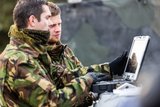
An Australian team is looking to develop autonomous CBRN sensing capabilities. (Photo: DST Group)
Australian CBRN study includes private sector support for the Defence Science and Technology group.


Perth-based Strategic Elements Ltd is conducting a feasibility and scoping study with the Defence Science and Technology (DST) Group in the Australian Department of Defence, to explore CBRN autonomous sensing and search.
The study will include the integration of DST search algorithms into a Stealth Technologies UAV that is autonomously launched from and landed by a UGV (also provided by Stealth Technologies).
Planck Aerosystems also supports the study with its autonomous UAV technology, Strategic Elements announced on 14 May.
‘The autonomous UGV would enable carriage of drones and sensors into the target environment keeping humans at a safe distance,’ Strategic Elements added. ‘The autonomous UAV enables rapid traversing of the area using sensors to map and/or monitor the location of CBRN sources.’



More from Defence Notes
-
![Ukraine turns legacy Kongsberg land turrets into semi-autonomous USV weapons]()
Ukraine turns legacy Kongsberg land turrets into semi-autonomous USV weapons
The company told Shephard that Ukraine is operating modified Protector weapon stations originally supplied for armoured vehicles, with human operators authorising engagements from hundreds of kilometres away.
-
![UK urged to prioritise sea, air and space over heavy armour]()
UK urged to prioritise sea, air and space over heavy armour
A report from the Council on Geostrategy argues the UK should move away from a traditional balanced force and shift investment to naval, air and space capabilities, backed by a larger fleet of attack submarines and deeper AUKUS integration.
-
![Thales: deployment speed to determine winners in ‘production versus production’ era]()
Thales: deployment speed to determine winners in ‘production versus production’ era
At its technology summit in London, attended by Shephard, Thales UK examined the importance of speed to delivery, the growing focus on cross-domain capabilities and how procurement reform could be crucial for future battlefield advantage.
-
![Orchestrating operational readiness across every defence domain]()
Orchestrating operational readiness across every defence domain
Are all systems ready for the next mission? Have upgrades been applied? Are all assets aligned to deploy together, on time and fully prepared? In modern defence operations, readiness is no longer measured platform by platform. It is measured by how well people, assets, data and decisions move together — across land, sea and air.