Lockheed Martin continues development of ARTS V-2
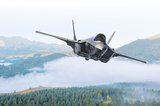
The Advanced Radar Threat System will be used to train USAF pilots for use in aircraft such as the F-35. (Photo: US Air Force)
Lockheed Martin has been awarded a contract modification for the continued development of ARTS V-2, which is intended to train US pilots.


Lockheed Martin has been awarded a contract modification valued at over $80 million by the US DoD for the existing Advanced Radar Threat System – Variant 2 (ARTS-V2) development contract.
The contract modification provides for the exercise of production option two and the delivery of five full ARTS-V2 systems.
The total cumulative face value of the contract is $539 million, with Air Force Life Cycle Management Center, Hill Air Force Base, Utah, being the contracting activity.
The ARTS-V2 system is a mobile advanced radar system intended to train USAF joint-strike fighter pilots to operate safely in hostile areas guided by modern radar-guided surface-to-air missiles.
The system will emulate advanced anti-aircraft missile radiated power, threat signals, antenna patterns, operational modes and threat tactics.
It is part of the overall Advanced Radar Threat System project to develop and implement a radar for live, virtual, constructive aircrew training for anti-access and area denial environments.
The contract was originally awarded in June 2016 and has an expected completion date of June 2027.


More from Air Warfare
-
![New US Army UH-60M Black Hawk order bridges uncertain path to MV-75 transition]()
New US Army UH-60M Black Hawk order bridges uncertain path to MV-75 transition
The US$234 million award for 16 Sikorsky UH-60Ms preserves near-term production, but funding uncertainty and an undefinitised contract leave the US Army’s long-term Black Hawk requirements unresolved.
-
![V-22 Osprey safety upgrade moves towards wider fleet installation under $35.5 million deal]()
V-22 Osprey safety upgrade moves towards wider fleet installation under $35.5 million deal
Bell Boeing will supply 73 additional ODSSHI kits as NAVAIR prepares to introduce predictive drive-system monitoring across US and Japanese V-22 fleets.
-
![AFA 2026: US Air Force examines uncrewed cargo aircraft for contested logistics]()
AFA 2026: US Air Force examines uncrewed cargo aircraft for contested logistics
The US Air Force is evaluating demonstrators for uncrewed cargo missions as it considers logistics requirements across the Pacific and other contested environments.
-
![Europe risks losing control of CUAS production capacity as manufacturers look abroad]()
Europe risks losing control of CUAS production capacity as manufacturers look abroad
European counter-drone developers are securing early orders in the Middle East while slow domestic acquisition processes threaten to redirect production capacity, expertise and investment away from Europe.