BAE Systems lauds Turkey-Typhoon talks, says “two to three” years to meet possible Eurofighter production ramp up
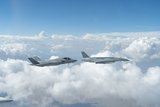
Turkey is in talks to possibly order 40 Eurofighter Typhoon aircraft. (Photo: Crown Copyright)
The company saw a strong H1 2025 in terms of sales momentum and orders, with CEO Charles Woodburn noting that talks with Turkey on Eurofighter Typhoon were progressing “quickly”.


BAE Systems’ CEO Charles Woodburn has lauded the quick progress being made with Turkey on a potential order for 40 Eurofighter Typhoon aircraft, as the company awaits firmed order demand ahead of a future ramp-up in production.
The comments came as BAE Systems announced a strong half year of growth for the business, with increased sales and profits up 11% from 2024, reflecting a growing global portfolio as defence spending increases.
Set against the backdrop of increased defence spending across the regions, BAE Systems upgraded its guidance, with sales expected to increase in the range of 8-10%.
The company saw £13.2 billion
Our news & analysis is now part of Defence Insight®
A Basic-level or higher Defence Insight subscription is now required to view this content.
More from Air Warfare
-
![Connecting the layers: how networks can secure the future of European air defence]()
Connecting the layers: how networks can secure the future of European air defence
The rise of drones has reshaped the threat landscape for all European militaries. For industry, future defensive strategies must carefully balance a mix of passive and active measures to address the evolving danger, based around a highly integrated and responsive network of sensors and effectors.
-
![October drone digest: France and Lithuania advance loitering munition procurements as global spending surges]()
October drone digest: France and Lithuania advance loitering munition procurements as global spending surges
Recent procurement developments in France and Lithuania highlight the growing demand for loitering munitions, with global annual spending forecast to increase nearly 50-fold between 2020 and 2029.
-
![Quantum Systems details 480km/h Ukrainian interceptor as production scales up]()
Quantum Systems details 480km/h Ukrainian interceptor as production scales up
Quantum Systems’s Ukraine-made interceptor SPYS is thought to cost approximately 10 times less than Russia's jet-powered uncrewed aerial systems and is being produced at scale.
-
![UK eyes lightweight satellite communications for UAVs]()
UK eyes lightweight satellite communications for UAVs
The UK is seeking to extend the operational reach of uncrewed aerial vehicles, reflecting growing demand for compact, energy-efficient technology to support beyond-line-of-sight operations.