


What’s next for the Pentagon after the Replicator programme?
Although the Replicator initiative has made several accomplishments, there are still multiple gaps to plug across the US Department of Defense (DoD) and its services.


The US Army is planning to procure two additional low-rate initial production brigade sets of iRobot’s model 320 small unmanned ground vehicle (SUGV).
On 1 March a statement from the company said the Defense Acquisition Board, which covers a variety of US defence acquisitions, approved the purchase in February under the Brigade Combat Team Modernization (BCTM) programme.
The programme aims to build a network of BCTs to operate on a rotational basis to increase mobility, protection, information and precision fires.
‘iRobot also continues to develop the follow-on variant of the SUGV for the BCTM programme. This SUGV variant will provide enhanced processing, sensor and communication capabilities and is expected to be available in the 2012 timeframe,’ the statement said.
‘These robots are meeting army requirements and performing as expected on the battlefield.’
The company said that the approval allows for the delivery of 76 SUGVs for two additional infantry brigade sets. iRobot has already delivered 45 of the platform as part of the army’s low-rate initial production contract for the first brigade set of BCTM Increment 1 capabilities.
iRobot teamed with Boeing in 2007 to design the ‘next-generation’ SUGV Early, to provide military, civil and commercial users with ‘unprecedented reconnaissance and secure, real-time intelligence capabilities’, according to Boeing.
The 320 SUGV is a tactical mobile robot for situational awareness gathering in ‘dangerous conditions’, while at the same time keeping ‘warfighters and public safety professionals out of harm’s way’.
The system was designed to be a smaller and lighter version of iRobot’s PackBot, used to disarm IEDs and search areas for hostile threats.
In February the iRobot/Boeing team delivered the first 30 SUGVs under a contract with the US Air Force for the service’s EOD team. This was the first task order contract, and runs through until September 2012.

Although the Replicator initiative has made several accomplishments, there are still multiple gaps to plug across the US Department of Defense (DoD) and its services.
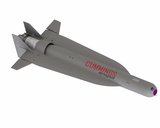
Cummings Aerospace presented its turbojet-powered Hellhound loitering munition at SOF Week 2025, offering a man-portable solution aligned with the US Army’s LASSO requirements.

PDW has revealed its Attritable Multirotor First Person View drone at SOF Week 2025, offering special operations forces a low-cost, rapidly deployable platform for strike and ISR missions, inspired by battlefield lessons from Ukraine.
Teledyne FLIR is highlighting the emerging requirements for 'recoverable and re-usable' loitering munitions across the contemporary operating environment during this week’s SOF Week conference in Tampa, Florida.

High-performance maritime industry player Kraken Technology Group, based in the UK, has used the SOF Week conference in Tampa, Florida this week to debut its K3 Scout uncrewed surface vessel (USV) to the North American market.
Red Cat and Palladyne AI recently conducted a cross-platform collaborative flight involving three diverse heterogeneous drones.

Connect with us on socials


