US Navy budget seeks 34 ships on yesterday’s industrial base
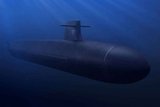
The USS Massachusetts (SSN 798), commissioned in Boston on 28 March 2026, is the most recent Virginia-class nuclear-powered fast-attack submarine and the fifth US Navy vessel to carry this name. (Photo: Defense Visual Information Distribution Service)
The 2027 budget demands 34 new vessels, but ageing yards and backlogs raise questions about whether American shipbuilding can deliver.


The US Navy (USN) is preparing for its most ambitious shipbuilding push in a generation. President Trump’s 2027 budget request earmarks US$65.8 billion for the procurement of 18 battle force ships and 16 non-battle force vessels, establishing what the administration has branded the “Golden Fleet”.
The request includes initial funding for the Trump-class battleship and next-generation frigates, alongside sustained or increased procurement of existing platforms.
Central to the plan is the continued expansion of the undersea fleet. The budget would maintain or increase procurement of the 12 planned Columbia-class submarines, at an average cost of $9.4 billion each,
Our news & analysis is now part of Defence Insight®
A Basic-level or higher Defence Insight subscription is now required to view this content.

More from Naval Warfare
-
![From the Baltic to the Gulf: where USV procurement is heading next]()
From the Baltic to the Gulf: where USV procurement is heading next
Saildrone’s new Copenhagen base is one sign of a larger shift, as navies globally turn to uncrewed vessels for surveillance and mine clearance.
-
![Competitive P17B tender marks a shift in Indian Navy frigate procurement]()
Competitive P17B tender marks a shift in Indian Navy frigate procurement
The Indian Navy's P17B programme is expected to combine greater weapons capacity with a competitive domestic construction model, although key systems could remain dependent on international supply chains.
-
![Quantum Systems enters maritime domain with Baltic-focused USV and UUV]()
Quantum Systems enters maritime domain with Baltic-focused USV and UUV
Quantum Systems has launched into the maritime domain with Seavex and Subvex, aiming to close a Baltic Sea ISR gap opened by infrastructure sabotage.