European procurement agency signs deal to progress the first phase of the European Patrol Corvette project
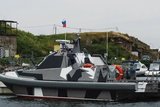
A major step has been taken in the EPC programme. (Image: Naviris)
The Modular and Multirole Patrol Corvette (MMPC) contract aims to provide the initial design of a next generation class of naval vessel, the European Patrol Corvette (EPC).


The first phase of the EPC project has commenced project with signature of MMPC contract between Organisation for Joint Armament Cooperation (OCCAR) and partner countries and their industrial groupings.
The consortium of Fincantieri (Italy), Naval Group (France), Navantia (Spain) and other beneficiaries from Greece, Denmark and Norway was coordinated by Navris, an alliance of Fincantieri and Naval Group.
The overall value of this first phase is €87 million (US$97 million) and €60 million will be funded by the European Commission in the form of grants while the remaining €27 million will be funded by the member states of Italy, France, Spain, Denmark, Greece and Norway.
The contract will provide for the initial design of EPC will include at first two main versions: the Long Range Multipurpose and the Full Combat Multipurpose.
A statement from the companies described the programme as ‘representing a step forward in the European defence cooperation [that] will strongly contribute to the European sovereignty in the second line vessels domain [by] increasing efficiency and lowering delays to go from the military need to the delivery to Navies.’
Related Programmes in Defence Insight
European Patrol Corvette (EPC)/Buques de Protección Marítima (BPM) [Spain]

More from Naval Warfare
-
![Australian industry programme builds pipeline for Virginia-class sustainment]()
Australian industry programme builds pipeline for Virginia-class sustainment
Australian businesses can now bid to support Virginia-class submarine sustainment in Western Australia, as momentum around the Henderson Defence Precinct also builds.
-
![Japan’s FY2027 budget bets on stand-off systems to offset demographic decline]()
Japan’s FY2027 budget bets on stand-off systems to offset demographic decline
Japan’s FY2027 defence budget backs stand-off strike, a 17-aircraft MQ-9B buy and a declared bid to lead the world in uncrewed maritime assets, alongside new frigates, submarines and support ships.
-
![Russia’s uncrewed boat portfolio hints at future naval demand]()
Russia’s uncrewed boat portfolio hints at future naval demand
Ukrainian intelligence has catalogued more than 20 Russian uncrewed surface vessels, revealing a portfolio weighted towards mine warfare and logistics, with implications for Western naval investment.