AUKUS advance on UUVs contrasts with Virginia-class compromise
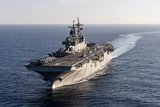
The USS Minnesota arrives in Rockingham, Western Australia, in February 2025. (US Navy/Lt Corey Todd Jones)
The AUKUS partnership is accelerating uncrewed undersea capability while its submarine arm inches forward, and Australia’s decision to settle for three in-service Virginia-class boats raises questions about industrial risk, dependency and whether Pillar II may deliver meaningful capability long before Pillar I can.


AUKUS has always carried the ambition of a generational submarine programme running alongside the urgency of near-term capability competition in the Indo-Pacific.
Nowhere has that ambition been more visible than at the AUKUS Defence Ministers’ meeting in Singapore on 30 May 2026, where Australia’s Richard Marles, the US’s Pete Hegseth and the UK’s John Healey simultaneously confirmed the first Pillar II signature project, with delivery starting in 2027, and quietly settled a debate over submarine acquisition by announcing that Australia would pursue three in-service Virginia-class submarines rather than a mix of new and second-hand hulls.
The two announcements sit at opposite ends of
Our news & analysis is now part of Defence Insight®
A Basic-level or higher Defence Insight subscription is now required to view this content.


More from Naval Warfare
-
![Competitive P17B tender marks a shift in Indian Navy frigate procurement]()
Competitive P17B tender marks a shift in Indian Navy frigate procurement
The Indian Navy's P17B programme is expected to combine greater weapons capacity with a competitive domestic construction model, although key systems could remain dependent on international supply chains.
-
![China’s mineral processing dominance exposes naval supply chain vulnerabilities]()
China’s mineral processing dominance exposes naval supply chain vulnerabilities
Competition for critical minerals, and China’s dominance of their processing, is emerging as a decisive factor in future naval procurement programmes.
-
![Suppliers await next step in Australia’s mine warfare transition]()
Suppliers await next step in Australia’s mine warfare transition
Australia’s mine countermeasure capability remains in flux as the Huon-class nears retirement, but accelerated investment in autonomous systems is opening a path for industry.
-
![Can the US Navy ask Indo-Pacific allies to do more while training with them less?]()
Can the US Navy ask Indo-Pacific allies to do more while training with them less?
As the Iran War draws US ships and marine corps units away from the Indo-Pacific, curtailed exercises and a temporary carrier gap are exposing tensions between Washington’s demand for more self-reliant allies and the joint training needed to realise that ambition.