US Navy’s Orca programme concludes design reviews


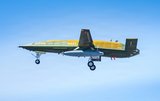
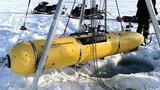
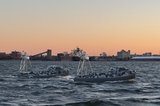
The US Navy’s Orca Extra Large Unmanned Undersea Vehicle (XLUUV) programme recently cleared a key milestone and is poised to pass another one in a few months, according to a service official.
Critical design reviews (CDRs) with the programme’s two competing vendors, Boeing and Lockheed Martin, concluded ‘in the last two weeks,’ said CAPT Pete Small, the US Navy’s program manager for unmanned maritime systems.
In early spring the navy intends to award up to two fabrication contracts to build a total of up to five vehicles.
‘I’m optimistic about the programme,’ Small said at the recently held Naval Submarine
Our news & analysis is now part of Defence Insight®
A Basic-level or higher Defence Insight subscription is now required to view this content.


More from Naval Warfare
-
![Canada assesses security equipment changes for Polar Icebreaker Imnaryuaq]()
Canada assesses security equipment changes for Polar Icebreaker Imnaryuaq
The Canadian Department of National Defence is evaluating communications and reconnaissance changes for CCGS Imnaryuaq’s expanded maritime security role, while retaining its 2032 acceptance target.
-
![US Navy’s MQ-25 Stingray approaches carrier-integration tests]()
US Navy’s MQ-25 Stingray approaches carrier-integration tests
Boeing has outlined its upcoming precision-landing and carrier-airspace trials as MQ-25 manufacturing shifts towards Illinois, with initial Lot 1 deliveries expected in 2029.
-
![From Poland to the Pacific: can Miecznik become a blueprint for other navies?]()
From Poland to the Pacific: can Miecznik become a blueprint for other navies?
Babcock is taking its Polish industrial partnership approach to Denmark and New Zealand as navies seek sovereign shipbuilding skills alongside ships.
-
![Unsettled waters in the North: can navies still trust their Arctic acoustic maps?]()
Unsettled waters in the North: can navies still trust their Arctic acoustic maps?
The changing Arctic environment is creating new challenges for submarine detection, driving demand for distributed sensors, uncrewed underwater vehicles and real-time acoustic modelling.