


US Army partners with Global Military Products to surge munitions production
Global Military Products was selected by the US Army to operate the Quad Cities Cartridge Case Facility and ramp up the production of various calibre shell cases.


SkyWest, Inc. has reported its preliminary financial figures for the year ending 31 December 2009.
Operating revenues for the year were $2.61 billion, compared to $3.50 billion for the year ended 31 December 2008. SkyWest reported net income of $83.7 million or $1.47 per diluted share, for the year ended 31 December 2009, compared with $112.9 million of net income, or $1.93 per diluted share for the previous year.
At 31 December 2009, SkyWest had approximately $732.4 million in cash and marketable securities, compared to $705.2 million as of 31 December 2008. SkyWest’s long-term debt was $1.82 billion as of 31 December 2009, compared to $1.68 billion at 31 December 2008. The increase in SkyWest’s long-term debt was primarily the result of acquiring 14 new Bombardier CRJ700s and one CRJ900 that were financed with long-term debt, partially offset by SkyWest’s payment of normal recurring debt obligations. SkyWest has significant long-term lease obligations that are recorded as operating leases and are not reflected as liabilities on SkyWest’s consolidated balance sheets. At a 5.8% discount rate, the present value of these lease obligations was approximately $2.1 billion as of 31 December 2009.
At the end of 2009, SkyWest’s fleet totalled 449 aircraft, consisting of 398 regional jets (246 assigned to Delta Air Lines, 147 assigned to United, two assigned to AirTran and three assigned to SkyWest), 51 Embraer EMB-120 Brasilias (40 assigned to United and 11 assigned to Delta).


Global Military Products was selected by the US Army to operate the Quad Cities Cartridge Case Facility and ramp up the production of various calibre shell cases.

Future operational superiority will be defined by the ability to connect systems, data and personnel into a wider network. For armed forces, this creates the need for a digital backbone that integrates and enhances sensors and effectors of all kinds.
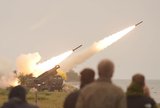
Estonian-made equipment is being put through the toughest of evaluations in the hands of Ukrainian soldiers resisting the full-scale Russian invasion which began in 2022. The country has long seen the threat and is continuing to adapt for the future.
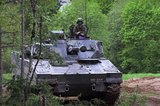
Estonia is looking to boost its local defence industry with directed funding, industry parks, support through international orders for equipment and rapid prototyping.

The UK has recently deployed a Type 45 destroyer to Cyprus and has bolstered its presence in the Middle East in recent weeks with supporting air power to protect neighbouring countries’ air defences.
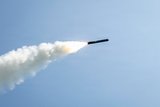
Intended to sustain Operation Epic Fury against Iran, efforts to increase the production of weapons and ammunition could expose long-standing weaknesses in the US defence industrial base.

Connect with us on socials


