Two new harbour patrol boats for Russian Navy


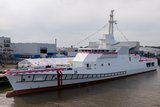
Russia’s Northern Fleet reported taking on strength in November with the addition of two newly-built Project 21980 Grachanok harbour protection boats.
Built by Rybinsk-based Vympel shipyard both of these are based in Gadzhievo, the main nuclear submarine base of the Northern Fleet, housing Delta II and Akula submarines. The hull numbers of the newly-delivered boats are 699 and 669, but no names have been announced yet.
Officially referred to as counter-sabotage boat, the Project 21980 is mainly intended for patrolling inside the Russian naval bases to counter attacks of combat divers or terrorists against shore-based naval installations and ships.
The
Our news & analysis is now part of Defence Insight®
A Basic-level or higher Defence Insight subscription is now required to view this content.


More from Naval Warfare
-
![AUKUS heavyweight torpedo test raises questions over future armed UUV requirements]()
AUKUS heavyweight torpedo test raises questions over future armed UUV requirements
A heavyweight torpedo firing from the Royal Navy’s uncrewed submarine XV Excalibur suggests a shift beyond surveillance, with allied navies eyeing strike roles for large autonomous undersea vessels.
-
![Industrial teams prepare roadmap for Indonesia aircraft carrier transformation]()
Industrial teams prepare roadmap for Indonesia aircraft carrier transformation
Fincantieri and PT PAL have agreed on a framework to modernise the former Giuseppe Garibaldi, with drones, communications and broader Italian–Indonesian industrial ties involved.
-
![Five years on: where could opportunities emerge next for AUKUS Pillar II?]()
Five years on: where could opportunities emerge next for AUKUS Pillar II?
Payload commonality, combat systems and electronic warfare are emerging as likely priorities as the trilateral partnership balances building submarines with sharing industrial ecosystems.