BAE awards more Type 26 supply contracts


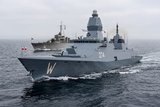
BAE Systems has awarded a further 15 manufacturing contracts worth more than £40 million to suppliers for the Type 26 programme, the company announced on 2 November.
The contract awards include diesel and gearbox filtration, vibration monitoring equipment, and pipework and fittings.
The Type 26 programme entered the manufacturing phase in July. In total 44 companies are working directly with BAE Systems to deliver the vessels.
Nadia Savage, programme director for Type 26 Global Combat Ship, BAE Systems, said: ‘With manufacturing underway for Glasgow, the first of the three City Class Type 26 frigates, we are working at pace with our suppliers to deliver these hugely capable ships to the Royal Navy.
‘Today’s announcement demonstrates once again that the construction of these ships is now very much underway.’



More from Naval Warfare
-
![Canada assesses security equipment changes for Polar Icebreaker Imnaryuaq]()
Canada assesses security equipment changes for Polar Icebreaker Imnaryuaq
The Canadian Department of National Defence is evaluating communications and reconnaissance changes for CCGS Imnaryuaq’s expanded maritime security role, while retaining its 2032 acceptance target.
-
![All eyes on Royal Navy’s Type 93 market engagement as industry prepares bids]()
All eyes on Royal Navy’s Type 93 market engagement as industry prepares bids
Responses are due by 29 October as the Royal Navy tests the market, with BAE Systems’ Herne and MSubs’ Excalibur setting up a contest where payloads may decide the winner.
-
![US Navy’s MQ-25 Stingray approaches carrier-integration tests]()
US Navy’s MQ-25 Stingray approaches carrier-integration tests
Boeing has outlined its upcoming precision-landing and carrier-airspace trials as MQ-25 manufacturing shifts towards Illinois, with initial Lot 1 deliveries expected in 2029.
-
![From Poland to the Pacific: can Miecznik become a blueprint for other navies?]()
From Poland to the Pacific: can Miecznik become a blueprint for other navies?
Babcock is taking its Polish industrial partnership approach to Denmark and New Zealand as navies seek sovereign shipbuilding skills alongside ships.