US gives green light for another Peace Krypton support package


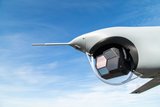
The US State Department has approved a possible FMS for equipment and services to extend the service life of the Hawker RC-800 Peace Krypton reconnaissance aircraft in service with the Republic of Korea Air Force (ROKAF).
If the FMS is approved Lockheed Martin will be the prime contractor on the $250 million deal, which includes ground system modernisation work and upgrades to the Joint Mission Planning System (JMPS).
Lockheed Martin was the previous contractor for Peace Krypton support, but that contract expired in December 2019.
Four Peace Krypton aircraft are in service with the ROKAF but these refurbished twin-jet corporate aircraft are showing their age, as they were bought in 1996. With this in mind, the South Korean Defense Acquisition Program Administration plans to spend KRW870 billion on buying two Baekdu-II Falcon 2000S SIGINT and reconnaissance aircraft for the ROKAF by 2026.
As part of our promise to deliver comprehensive coverage to our Defence Insight and Premium News subscribers, our curated defence news content provides the latest industry updates, contract awards and programme milestones.


More from Air Warfare
-
![Tekever eyes naval carrier surveillance role for AR5 uncrewed aircraft]()
Tekever eyes naval carrier surveillance role for AR5 uncrewed aircraft
Tekever’s AR5 carrier debut highlights its potential for maritime surveillance as the Royal Navy develops its future hybrid air wing.
-
![F-16 backbone, Gripen spearhead: Ukraine’s future fighter fleet takes shape]()
F-16 backbone, Gripen spearhead: Ukraine’s future fighter fleet takes shape
Ukraine’s future fighter fleet could combine F-16s, Gripens and potentially Rafales, balancing combat needs against training, logistics and aircraft supply constraints.
-
![Northrop–Hermeus deal underscores push to pair startup speed with defence know-how]()
Northrop–Hermeus deal underscores push to pair startup speed with defence know-how
Northrop Grumman plans mission systems testing following its Hermeus agreement, highlighting how established defence contractors are partnering with newer companies to accelerate development and bring autonomous capabilities to military customers.
-
![Propulsion for the autonomous era]()
Propulsion for the autonomous era
For decades, advanced military propulsion has centred on enabling ever-more capable fighters and bombers – delivering more thrust, more range, greater power, and thermal management, plus longer service lives. Those requirements remain essential. However, the rise of autonomous systems, advanced effectors, and autonomous collaborative platforms is redefining what that propulsion must deliver.