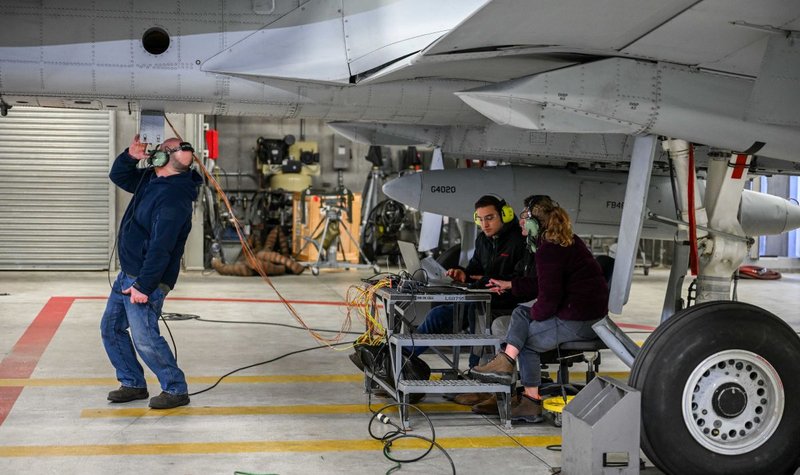
Lorenzo Mariani’s Farnborough remarks on the prospect of Germany joining the Global Combat Air Programme struck a cautious tone, as he welcomed Canada’s arrival as the programme’s first observer nation.
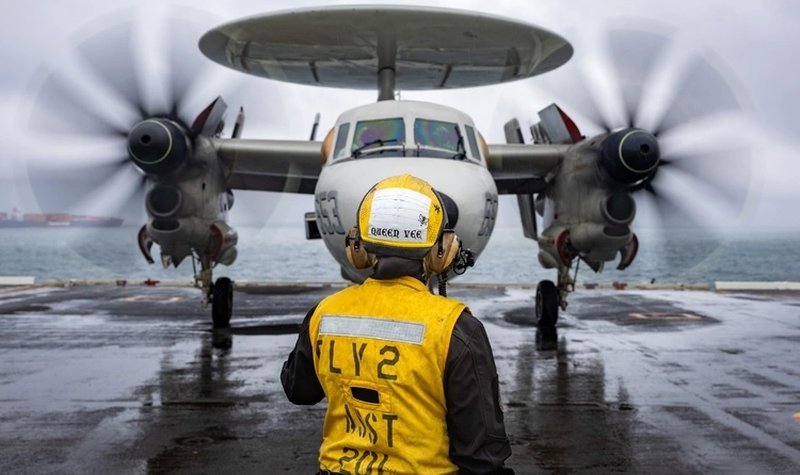
NAVAIR plans to award a five-year retrofit contract to a broader transition of the carrier-based airborne early warning fleet to the AHE configuration.
Pivotal has demonstrated its lightweight electric VTOL aircraft, BlackFly, live at SOF Week 2025, as the company positions the platform for special operations and wider defence applications.
Intelsat outlines how its multi-orbit SATCOM architecture is enhancing connectivity and resilience for special operations forces operating in degraded and contested environments.
Artificial intelligence has supported C2 systems and decision-making for more than two decades. It has gradually built up a head of steam in the 2020s, but what is it achieving today and what role could it play in the future?
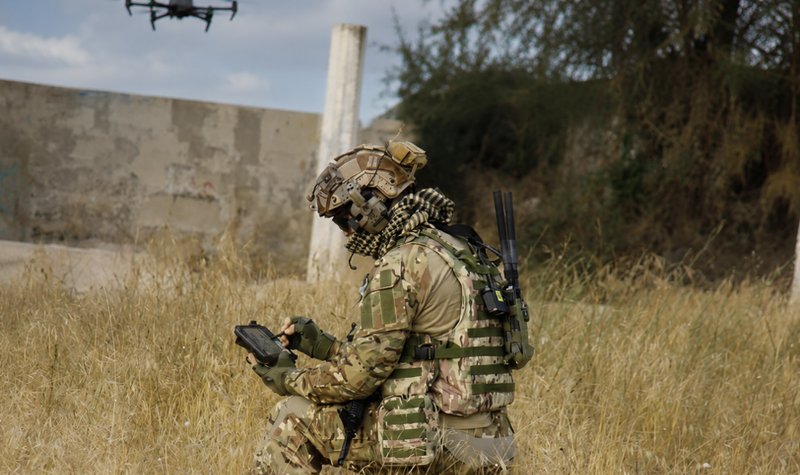
In Conversation… Ahmet Akyol, CEO of ASELSAN, talks to Shephard’s Gerrard Cowan about how the rapid evolution of uncrewed aerial systems (UAS) is transforming the battlespace, with militaries focused on both deploying these platforms to max...
Ottawa explores expanding defence-industrial cooperation with Washington into sensitive programmes, an approach that could reshape NORAD modernisation, strengthen North American supply chains and create new opportunities for defence contrac...
B-52 modernisation, Sentinel, MH-139A, T-7A and Air Force One replacement are among the US Air Force programmes the GAO says remain at risk of further schedule slips and cost growth due to acquisition and management challenges.
Procurement of the Eagle Passive Active Warning Survivability System for future production lots signals the air force's commitment to an expanded 267-aircraft Eagle II fleet while sustaining full electronic warfare capability on every fight...
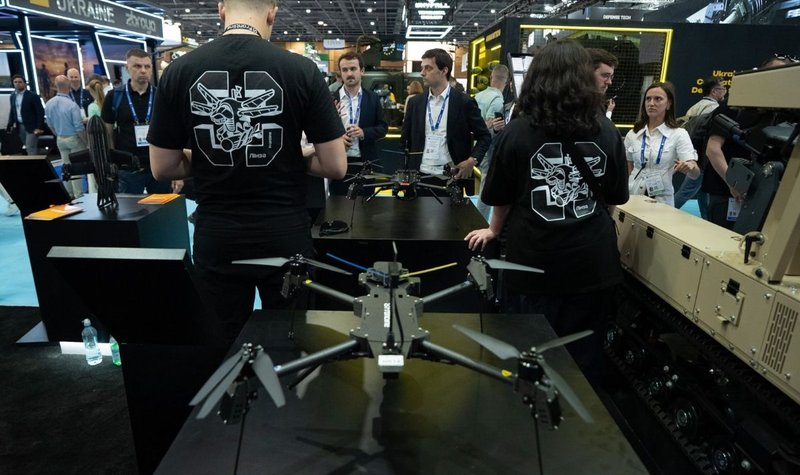
As industrial-scale drone production proves its battlefield worth in Ukraine, what happens to that production capacity and knowhow once the guns fall silent – and is Ukraine about to become one of the world’s most credible UAV export partne...
New recovery vehicles, reconnaissance platforms, autonomous fire-support systems and short-range air-defence capabilities on display at Eurosatory 2026 highlighted how land forces are adapting to evolving battlefield requirements.
L3Harris is positioning its AERIS X aircraft and a planned Polish industrial partnership as it anticipates a competition to replace Poland’s Saab 340 fleet.
New armoured vehicles, artillery systems and robotic platforms on display at Eurosatory 2026 highlight how armies are seeking greater mobility, firepower, survivability and automation as they modernise ageing fleets and adapt to lessons fro...
From mobile launch trailers to ship decks, software and platforms such as Shield AI’s Hivemind and its X-BAT and V-BAT are positioning autonomous systems as a credible force option for militaries priced out of traditional airpower.
BAE Systems is presenting its Next Generation Indirect Fire Control System at Eurosatory 2026. It is designed to connect large calibre guns with wider sensor and effector networks to provide targeting information more quickly.