Lockheed Martin wins contract to build the Trident II D5 Life Extension missile
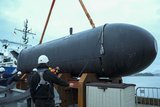
Submarine-launched missiles are key to the nuclear deterrent. (Image: Lockheed Martin)
The company will also invest in new production facilities to service the ongoing need for the D5LE2.


Lockheed Martin has been contracted to design the next upgrade to the Trident II strategic weapon system (SWS).
The Trident II D5 Life Extension (D5LE2) missile, as the upgraded version will be called, will be carried onboard the Columbia-class ballistic missile submarine, and is expected to maintain the credibility of the SWS throughout 2084.
Lockheed Martin won a US$383 million contract modification to design and develop the next generation of the Trident II from the US Government.
Related Articles
Lockheed Martin to make more USN Trident II D5 missiles
New deals awarded for US submarine electronic warfare systems and the USS Ronald Reagan
The system is expected to be critical to the nation’s sea-based defence for decades to come.
Jerry Mamrol, vice president of Fleet Ballistic Missiles at Lockheed Martin, explained that: “The second life extension of the Trident D5 missile will enable the United States and United Kingdom, through the Polaris Sales Agreement, to maintain credibility deterring evolving threats.”
The D5 missile is the world’s most advanced ballistic missile, and is currently carried onboard the Ohio-class submarine in the US, and the Vanguard-class in the UK. As the Ohio-class is due eventually to be replaced by the Columbia programme as carrier of the US nuclear deterrent, so the Vanguard is due to be replaced by the Dreadnought in the UK.
The new missile will be deployed on the next generation of deterrent submarines.
Lockheed Martin will also build an approximately 225,000 square foot facility in Titusville, Florida to produce components for the D5LE2 submarine-launched ballistic missile.
The new facility is expected to bring 300 new skilled jobs to the area. It is scheduled to be ready for operations in 2027, and is expected to remain in operation for the next six decades of missile production, for use by the US Navy.
Related Equipment in Defence Insight



More from Naval Warfare
-
![AUKUS heavyweight torpedo test raises questions over future armed UUV requirements]()
AUKUS heavyweight torpedo test raises questions over future armed UUV requirements
A heavyweight torpedo firing from the Royal Navy’s uncrewed submarine XV Excalibur suggests a shift beyond surveillance, with allied navies eyeing strike roles for large autonomous undersea vessels.
-
![Industrial teams prepare roadmap for Indonesia aircraft carrier transformation]()
Industrial teams prepare roadmap for Indonesia aircraft carrier transformation
Fincantieri and PT PAL have agreed on a framework to modernise the former Giuseppe Garibaldi, with drones, communications and broader Italian–Indonesian industrial ties involved.
-
![Denmark’s air defence frigate requirement draws growing European competition]()
Denmark’s air defence frigate requirement draws growing European competition
With no formal competition under way, industrial partnerships, production capacity and air defence capability could all shape the programme as Denmark considers how to replace its three Iver Huitfeldt-class frigates.
-
![Singapore expands maritime presence with future-ready Sentinel OPV]()
Singapore expands maritime presence with future-ready Sentinel OPV
Singapore is building space for uncrewed systems and future technologies into its new Sentinel-class OPVs, reflecting a wider move towards adaptable vessels capable of maintaining persistent maritime presence.