AUVSI: USAF outlines evolving procedures for Global Hawk
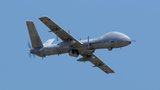
Lessons learned from ongoing tactical applications are leading to an evolution in advanced operational procedures for the United States Air Force (USAF) RQ-4 Global Hawk.
The ongoing evolution was highlighted in general session comments presented to AUVSI’s Unmanned Systems North America by Brig Gen H D “Jake” Polumbo, Director of Plans and Programs at Headquarters, USAF Air Combat Command.
According to Polumbo, 'it takes a lot of coordination to get a Global Hawk from the 9th Reconnaissance Wing [Beale Air Force Base, California] to the 380th Air Expeditionary Wing primary base.'
'That is no easy feat to move that 10,000
Already have an account? Log in
Want to keep reading this article?
Read this Article
Get access to this article with a Free Basic Account
- Original curated content, daily across air, land and naval domains
- 2 free stories per week
- Personalised news alerts
- Daily and weekly newsletters
Unlimited Access
Access to all our premium news as a Premium News 365 Member. Corporate subscriptions available.
- Original curated content, daily across air, land and naval domains
- 14-day free trial (cancel at any time)
- Unlimited access to all published premium news


More from Uncrewed Vehicles
-
![Ready for the race: Air separation drone swarms vs. air defence systems]()
Ready for the race: Air separation drone swarms vs. air defence systems
As the dynamics of aerial combat rapidly evolve, Chinese scientists have engineered a sophisticated air separation drone model that can fragment into up to six drones, each capable of executing distinct battlefield roles and challenging the efficacy of current anti-drone defences such as the UK’s Dragonfire laser system.
-
![Israel’s MALE UAVs ‘must adapt’ to Iranian-made air defences]()
Israel’s MALE UAVs ‘must adapt’ to Iranian-made air defences
Advancements in air defence technologies have begun to reshape aerial combat dynamics in the Middle East, as illustrated by recent events involving the Israeli Air Force and Hezbollah.
-
![Hundreds more UAS sent to Ukraine forces with thousands more on the way]()
Hundreds more UAS sent to Ukraine forces with thousands more on the way
Both sides of the Russia-Ukraine war have been using UAS for effective low-cost attacks, as well as impactful web and social media footage. Thousands more have now been committed to Ukrainian forces.
-
![AI and software companies selected for US Army Robotic Combat Vehicle subsystems]()
AI and software companies selected for US Army Robotic Combat Vehicle subsystems
The US Army has intentions to develop light, medium and heavy variants of the Robotic Combat Vehicle (RCV) as part of the branche’s Next Generation Combat Vehicle family.
-
![DroneShield to improve software of DroneSentry-X C-UAS system under new contract]()
DroneShield to improve software of DroneSentry-X C-UAS system under new contract
DroneSentry-X, a cross-vehicle compatible, automated 360° C-UAS detect and defeat device, can offer 360° awareness and protection using integrated sensors. According to its manufacturer, it is suitable for mobile operations, on-site surveillance and on-the-move missions.
-
![Ukraine takes delivery of new indigenous C-UAS systems]()
Ukraine takes delivery of new indigenous C-UAS systems
Funded by the country’s former president, the new C-UAS systems will be sent to the frontline where they have already been tested against Russian invading forces.